
Choosing between mobile providers feels like navigating a maze, but the winner depends entirely on your location and budget. For most people, T-Mobile offers the best overall value and 5G speeds, while Verizon remains the king of rural reliability, AT&T provides the most consistent performance, and Spectrum is the go-to budget choice for existing cable customers.
I've spent years testing these networks in both crowded cities and the middle of nowhere. It's fascinating to see how much the landscape has shifted. If we look at 2010 vs 2020 technology, the jump from 3G to 5G is staggering.
Today, we aren't just talking about making calls; we’re talking about replacing home internet with a mobile hotspot.
Which carrier has the best 5G coverage and reliability?
When we talk about coverage, we have to distinguish between "total footprint" and "usable 5G." Verizon has historically held the crown for total landmass covered, making it the darling of those who live in the mountains or deep rural plains. However, T-Mobile’s acquisition of Sprint’s mid-band spectrum gave them a massive head start in the 5G race.
AT&T occupies a middle ground. They don’t always have the flashiest speeds, but their network is incredibly stable. According to the Federal Communications Commission (FCC), nationwide coverage maps are becoming more transparent, but your specific neighborhood matters more than a national average.
Spectrum, interestingly, doesn't own its towers; it uses Verizon’s network, meaning you get Verizon-level coverage at a lower price, though you might be "deprioritized" (slowed down) during heavy congestion.
A Breakdown of Performance Metrics
| Feature | T-Mobile | Verizon | AT&T | Spectrum Mobile |
|---|---|---|---|---|
| Primary Strength | 5G Speed & Value | Rural Coverage | Reliability/Stability | Low Cost for Cable Users |
| 5G Availability | Highest | Moderate | High | Moderate (Verizon towers) |
| Pricing | Competitive | Premium | Premium | Budget-friendly |
| Perks | Netflix, Apple TV+ | Disney Bundle, Hulu | None (mostly) | WiFi Hotspot Access |
| Data Caps | High/Unlimited | High/Unlimited | High/Unlimited | Lower (typically 20-30GB) |
Is T-Mobile actually faster than Verizon and AT&T?
In my experience, yes, specifically regarding 5G. T-Mobile’s "Ultra Capacity" 5G is widely available in most suburban and urban areas. While 24ghz vs 5ghz range in meters is a concern for home routers, cellular 5G operates on different bands that allow T-Mobile to pierce through buildings more effectively than Verizon’s early "Millimeter Wave" technology.
Verizon is catching up fast by deploying C-Band spectrum, but T-Mobile still leads in average download speeds in most independent tests. If you are a heavy gamer or someone who uploads large video files on the go, the difference is noticeable. However, if you're just scrolling social media, all three "Big Three" carriers will feel roughly the same.
Image source: Pexels / Brett Jordan (Pexels License)
How does Spectrum Mobile compete with the Big Three?
Spectrum is the "wildcard" here. They are a Mobile Virtual Network Operator (MVNO). This means they buy space on Verizon’s towers and resell it to you.
The catch? You generally must be a Spectrum Internet customer to get their best mobile rates.
- Pros: It is significantly cheaper for a single line compared to Verizon’s flagship plans.
- Cons: You don't get the "perks" (like free streaming services), and your data might be slowed down if the tower is crowded.
- Best for: Families who already have Spectrum cable/internet and want to slash their monthly bill by $50 or more.
Comparing Spectrum to the others is like comparing 2000 vs 2020 technology; the business model has evolved to favor bundles rather than standalone services.
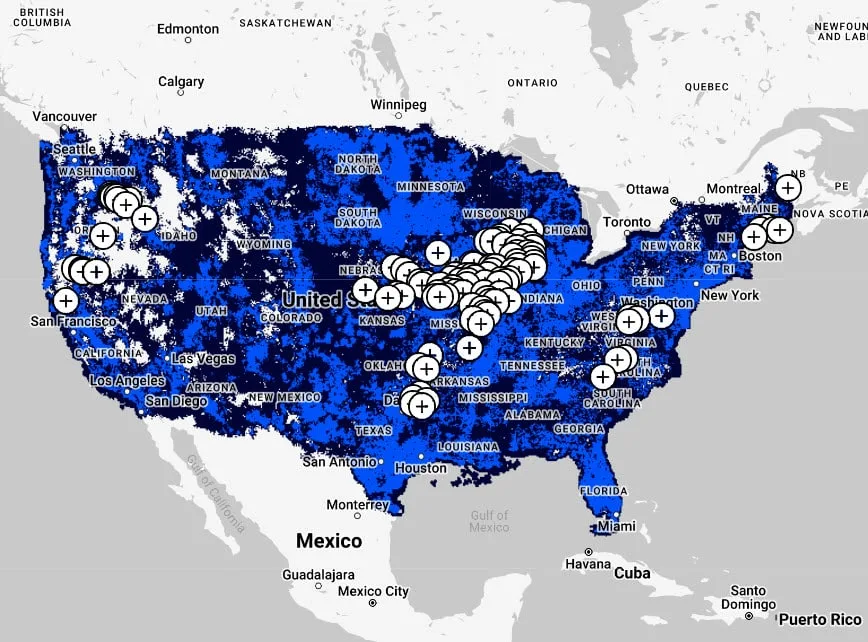
Image source: Web (Bing) / fleetistics.com (Web image (fair-use with source credit))
Which provider offers the best value for families?
Value isn't just the lowest price; it’s what you get for your dollar.
- T-Mobile Go5G Plus: This is widely considered the best family plan because taxes and fees are included in the advertised price. What you see is what you pay. They also tend to offer the best "free phone" deals without requiring a specific high-end trade-in.
- AT&T Unlimited Your Way: AT&T allows you to mix and match different unlimited tiers on one account. This is great if Dad needs high-speed data for work but the kids just need basic access.
- Verizon Unlimited Ultimate: This is the most expensive, but it includes international data and high-quality streaming perks. It’s a premium service for those who don’t mind paying for the "best."
- Spectrum One: Often, Spectrum will offer one mobile line for free for a year when you sign up for their internet. For a single user, that is an unbeatable value.
Are the "perks" worth the higher monthly cost?
We’ve moved far beyond the 1950s technology vs today, where a phone was just a phone. Now, these carriers want to be your entertainment hub.
- Verizon offers the "Disney Bundle" (Disney+, Hulu, and ESPN+). If you already pay for these, that’s a $15, $20 monthly saving, which effectively lowers your phone bill.
- T-Mobile provides Netflix and Apple TV+. Again, if you're a streamer, this is "found money."
- AT&T has largely stepped away from these perks, focusing instead on aggressive phone subsidies and hardware discounts.
- Spectrum focuses strictly on the utility of the connection, keeping the price low by stripping away the fluff.
How do I choose based on my specific location?
Before you sign a three-year device contract, you need to do your homework. I always recommend checking the OpenSignal maps rather than the official carrier maps. Official maps are often "optimistic," to put it kindly.
If you live in a city, T-Mobile is usually the speed king. If you travel through rural America or spend time on job sites in the middle of nowhere, Verizon’s LTE fallback is still more robust. AT&T is the "Goldilocks" choice, rarely the absolute fastest, but rarely the slowest, with excellent building penetration.
If you ever experience glitches while switching SIM cards or setting up a new device, knowing how to restart vs power off android can often clear up network registration issues. It sounds simple, but a fresh reboot helps the phone "handshake" with the new towers more effectively.
My Personal Experience With the "Big Four"
I’ve hopped between all of these carriers over the last decade. Two years ago, I was a die-hard Verizon user because I lived in a rural area where AT&T and T-Mobile simply didn't have towers. Moving to a mid-sized city changed everything.
I switched to T-Mobile and my speeds went from 20 Mbps to 600 Mbps instantly. However, I noticed that when I went into large concrete buildings (like Costco), my signal would drop. I eventually tried Spectrum Mobile because I had their internet, and the experience was surprisingly good.
It felt exactly like Verizon, but my bill dropped by $40 a month.
The biggest headache was always the "deprioritization" on Spectrum. During a local football game, my data was almost unusable because the towers were prioritizing the "real" Verizon customers. I eventually landed back on AT&T because it offered the most consistent experience across my daily commute, even if it wasn't the fastest in any single spot.
Frequently Asked Questions
Which carrier is best for international travel?
T-Mobile is generally the leader here. Their higher-tier plans include free data and texting in over 210 countries. Verizon and AT&T usually charge a "Day Pass" fee (around $10/day) for international usage, which adds up quickly.
Can I keep my phone if I switch to Spectrum?
Yes, as long as your phone is unlocked and compatible with Verizon’s network. Most modern iPhones and Samsung devices work across all carriers. If you're coming from an older device, you might want to check the 5ghz wifi range vs 24 ghz huawei specs if you're using an international model, as band compatibility can vary.
Does Spectrum Mobile have data caps?
Yes. While they call it "unlimited," they usually throttle your speeds significantly after you use 20GB or 30GB of data. T-Mobile and Verizon’s premium plans offer "truly" unlimited data that never slows down regardless of how much you use.
Who has the best customer service?
This is subjective, but AT&T and Verizon generally have more physical stores where you can talk to a human. T-Mobile’s "Team of Experts" approach has won awards, but their physical store presence can be hit-or-miss in smaller towns.
Is 5G really better than 4G LTE?
In terms of capacity, yes. 5G allows more people to be on the same tower without the network crashing. If you're wondering 24 ghz vs 5ghz hotspot which is better, the same logic applies to 5G: higher frequencies offer insane speeds but shorter range, while lower frequencies (like 4G) travel further.
Selecting a mobile provider is no longer just about who has the best commercials. It’s a balance of where you live, what streaming services you already pay for, and how much data you actually consume. Whether you choose the raw speed of T-Mobile, the reach of Verizon, the stability of AT&T, or the savings of Spectrum, you're getting access to the most advanced communication network in human history.
Take your time, check the local coverage maps, and don't be afraid to switch if your current provider isn't giving you the bars you pay for every month. Enjoy the freedom of staying connected!

I’m the tech enthusiast behind FixTechEasy. I know how stressful it is when your technology doesn’t cooperate. My goal here is to take the headache out of troubleshooting by breaking down complex tech problems into simple, easy-to-follow steps. From quick fixes to deep-dive guides, I’m here to help you get back to what matters most. Let’s get your tech working for you, not against you.