
The leap from 1950s technology to today’s digital era represents the most radical shift in human history, moving from analog, mechanical systems and vacuum tubes to high-speed fiber optics, artificial intelligence, and pocket-sized supercomputers. While the 1950s focused on physical automation and the dawn of the Atomic Age, today’s tech centers on instant global connectivity and data-driven intelligence.
I’ve often sat with my grandfather, listening to him describe the "magic" of the first microwave oven or the way the neighborhood gathered around the only black-and-white television on the block. To him, those were the peak of human achievement. To me, looking at the smartphone in my hand that possesses millions of times more processing power than the computers that sent Apollo to the moon, it feels like we’re living in a sci-fi novel.
Comparing these two eras isn't just about noting that things got smaller or faster; it’s about how our relationship with the world has fundamentally transformed. In the 50s, technology was a tool you visited, a heavy machine in the kitchen or a massive console in the living room. Today, technology is an invisible layer draped over every second of our lives.
How has the "Heart of the Home" changed since the 1950s?
In the mid-20th century, the kitchen was the center of technological pride. Post-war optimism brought us "Labor-Saving Devices." We saw the rise of the electric toaster, the heavy-duty stand mixer, and the refrigerator that didn't require a block of ice. However, these were largely mechanical.
They had gears, belts, and loud motors.
Today, our homes are "smart." We don't just have a thermostat; we have devices that learn our schedules. If you look at how we manage our climate now, it's lightyears ahead of the manual sliders of 1955. We can even check this basic walkthrough to see how modern interfaces have simplified what used to be a complex series of manual adjustments.
Modern appliances are no longer just "on" or "off." They are nodes on a network. Your refrigerator can tell you when the milk is low, and your oven can be preheated from a miles-away office. In the 50s, if you left the stove on, you had a house fire.
Today, your phone sends you a push notification.
The Evolution of Home Efficiency
| Feature | 1950s Technology | Today's Technology |
|---|---|---|
| Primary Display | Cathode Ray Tube (CRT) | OLED / Micro-LED |
| Storage Media | Magnetic Tape / Paper Cards | Cloud Storage / NVMe SSDs |
| Communication | Rotary Landlines / Party Lines | 5G Smartphones / VoIP |
| Computing Power | Room-sized (ENIAC-style) | Wearable (Smartwatches) |
| Home Heating | Manual Furnaces / Coal | AI-Driven Smart HVAC |
| Music Source | Vinyl Records (33/45 RPM) | On-demand Streaming (Spotify) |
Why was 1950s computing so different from our modern devices?
If you wanted to use a computer in 1954, you didn't sit at a desk; you walked inside the machine. Early computers like the UNIVAC I weighed tons and used thousands of vacuum tubes. These tubes generated immense heat and blew out frequently.
There was no "user interface" as we know it. You fed the machine punch cards, and it spat out calculations hours later.
Fast forward to now, and we've traded vacuum tubes for silicon transistors so small that billions of them fit on a chip the size of a fingernail. According to the National Institute of Standards and Technology, the precision with which we now measure and manufacture at the atomic scale is what allows our modern world to function.
We've moved from "batch processing" to "real-time interaction." In the 50s, the idea of a "personal" computer was laughable, it was a tool for the census bureau or the military. Today, the general functionality of our gadgets is so intuitive that a toddler can navigate an iPad before they can tie their shoes.
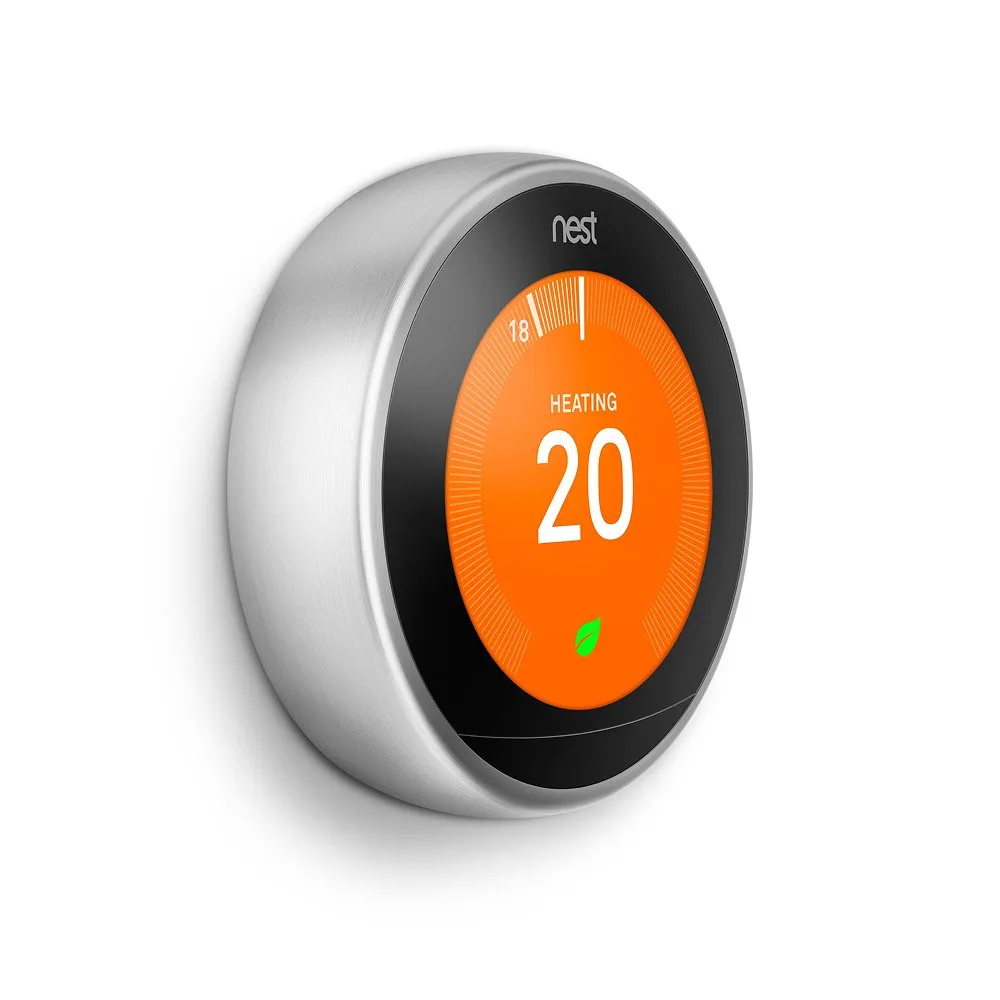
Image source: Web (Bing) / geeksonsite.com (Web image (fair-use with source credit))
Is the way we communicate unrecognizable to a 1950s teenager?
Imagine it’s 1958. You want to talk to your cousin three states away. You pick up a heavy rotary phone, wait for a dial tone, and hope nobody else on your "party line" is eavesdropping.
If you want to send a photo, you take a picture on film, drop it at a pharmacy, wait a week for prints, and put them in a stamped envelope.
Today, that entire process takes four seconds.
- Social Connectivity: We’ve gone from local social circles to global digital "villages."
- Information Velocity: In the 50s, news traveled via the morning paper or the 6:00 PM broadcast. Now, we see events unfolding in real-time via live streams.
- The Death of Distance: Long-distance tolls used to be a major household expense. Now, high-definition video calls are essentially free over Wi-Fi.
The way we handle daily tasks has shifted from physical errands to digital clicks. We don't "go to the bank" as much as we "open the app."
Step-by-Step Installation: From Analog to Digital Wiring
When we look at the physical infrastructure of our homes, the difference is staggering. In the 50s, wiring was simple but dangerous, often ungrounded and wrapped in cloth insulation. Modern systems are designed for data as much as they are for power.
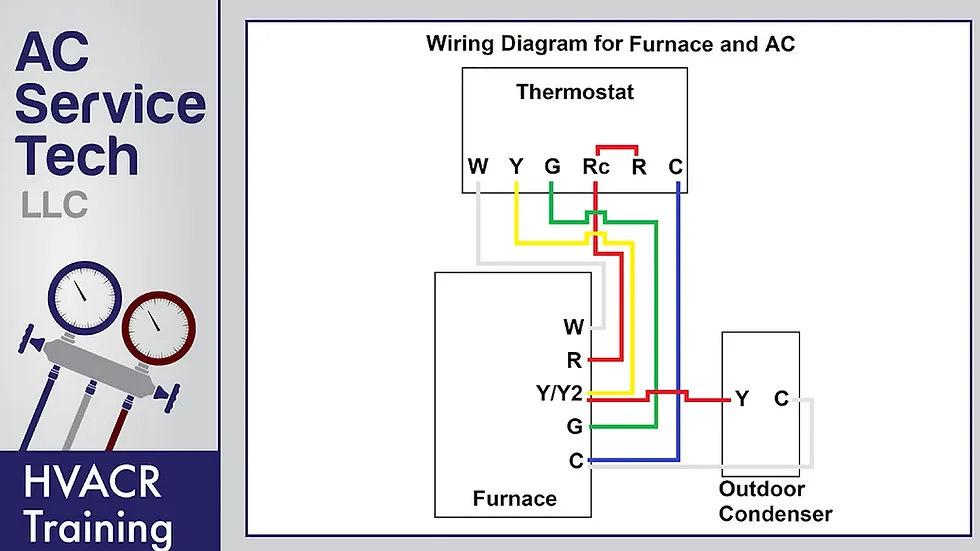
Image source: Bing (Web (fair-use with source credit))
- Identify the Source: In the 50s, this was a simple fuse box. Today, it’s a circuit breaker panel, often integrated with surge protection for sensitive electronics.
- Cable Management: We’ve moved from simple copper strands to shielded Cat6 cables and fiber optics that carry pulses of light.
- Low-Voltage Systems: Modern homes require specialized low-voltage setups for things like smart doorbells and thermostats.
- Verification: Where a 50s electrician used a simple test light, we now use digital multimeters and signal analyzers to ensure "clean" power and high-speed data integrity.
What happened to the "Mechanical Soul" of the 1950s?
There is a certain nostalgia for the 1950s because everything was repairable. If your toaster broke, you took it apart with a screwdriver, bent a piece of metal back into place, and it worked for another twenty years. There was a tactile, mechanical soul to the objects of that era.
Today, we live in a world of "Black Box" technology. If your iPhone screen stops responding, there’s no gear to fix or wire to solder easily. Most of our tech is miniaturized to the point of being disposable or requiring specialized robotic repair.
While this makes our devices incredibly powerful and portable, we’ve lost that hands-on maintenance culture that defined the mid-century.
Personal Experience: A Tale of Two Radios
I recently spent a weekend restoring my great-grandfather's 1952 Zenith radio. It’s a beast of a machine, heavy wood, glowing glass tubes, and a warm hum that takes three minutes to "warm up" before it makes a sound. When it finally catches a signal, the audio is rich, crackly, and feels alive.
Compare that to my current smart speaker. I tell it to play jazz, and it instantly pulls a high-fidelity stream from a server halfway across the world. It’s objectively better in every measurable way: it’s clearer, louder, and has access to every song ever recorded.
Yet, there’s something about the 1950s radio that feels more "human." The 50s tech was an event; modern tech is a utility. We’ve traded the "experience" of tech for the "convenience" of tech.
How did entertainment change for the average family?
In the 1950s, the television was a piece of furniture. It was the "Electronic Hearth." Families sat together because there was only one screen and three channels. You watched what was on, when it was on.
If you missed it, it was gone forever.
Now, we are in the era of "Infinite Choice." We have screens in our pockets, on our wrists, and on our walls. Streaming services like Netflix and YouTube mean we never have to wait for a broadcast again. Interestingly, researchers at Massachusetts Institute of Technology (MIT) have noted that while we have more access to information than ever, our attention spans have evolved to process "snackable" content rather than the long-form programming of the 1950s.
Tips for Navigating Modern Tech (Without Losing Your Mind)
- Embrace Automation: Let smart sensors handle the boring stuff like lights and temperature so you can focus on your hobbies.
- Curate Your Feed: In the 50s, the "editor" chose what you saw. Today, you are the editor. Choose wisely to avoid digital burnout.
- Keep a Backup: 1950s photos are physical and can last 100 years in a shoebox. Digital photos can vanish if a hard drive fails. Always use the cloud.
- Disconnect Regularly: The biggest advantage 1950s families had was the ability to "turn off." Make sure you schedule screen-free time.
Frequently Asked Questions
Q: Was 1950s technology more durable than today's?
A: Generally, yes. Because 1950s tech was mechanical and used larger components, it was built to be repaired rather than replaced. Modern tech is more efficient and powerful but has a much shorter lifecycle due to "planned obsolescence" and rapid software updates.
Q: Did people in the 1950s have "Internet"?
A: No. The precursor to the internet (ARPANET) didn't start until the late 1960s. In the 50s, "networking" meant the physical wires used by the telephone company or the radio waves used by broadcasters.
Q: Why were 1950s computers so big?
A: They relied on vacuum tubes, which are about the size of a lightbulb. To get any real processing power, you needed thousands of them, plus massive cooling systems to keep the room from melting. Today, we use microscopic transistors.
Q: Is 1950s tech still used today?
A: In some niches, yes! Audiophiles still love vacuum tube amplifiers for their "warm" sound, and some power grids still rely on heavy-duty analog relays because they are immune to certain types of digital hacking.
Watching the transition from the 1950s to the 2020s is like watching a child grow into an adult. The 50s gave us the foundation, the jet engine, the transistor, and the first taste of automation. Today, we’ve taken those seeds and built a digital forest.
Whether you prefer the tactile click of a 1950s typewriter or the haptic buzz of a modern touch screen, there's no denying that we live in an era of wonders. Take a moment to appreciate the incredible tools at your fingertips, but don't forget to occasionally look up from the screen and enjoy the analog world around you.

I’m the tech enthusiast behind FixTechEasy. I know how stressful it is when your technology doesn’t cooperate. My goal here is to take the headache out of troubleshooting by breaking down complex tech problems into simple, easy-to-follow steps. From quick fixes to deep-dive guides, I’m here to help you get back to what matters most. Let’s get your tech working for you, not against you.
2 thoughts on “1950s Technology vs Today”