
The year 2000 feels like a lifetime ago, doesn't it? Back then, we were just breathing a sigh of relief that Y2K didn't end the world. In the twenty years that followed, we moved from a world of "connecting" to a world of "always connected." The primary difference between 2000 and 2020 technology is the shift from stationary, analog-tethered devices to an ubiquitous, high-speed mobile ecosystem powered by cloud computing and AI. We swapped the screech of dial-up for the seamless flow of 5G.
I remember sitting in my room in 2000, waiting five minutes for a single low-resolution photo of a cardinal to download on my desktop PC. Fast forward to 2020, and I’m standing in the backyard, streaming 4K video of a nesting blue jay directly to a global audience from a device that fits in my pocket. It’s not just that things got faster; the very nature of how we interact with the world fundamentally pivoted.
How did our daily gadgets change over two decades?
In 2000, your pockets were crowded. You had a Nokia brick for calls, a PalmPilot for your calendar, a portable CD player (the "Discman") for tunes, and maybe a small digital camera if you were a tech early adopter. By 2020, the smartphone had swallowed all of them.
The "Swiss Army Knife" of tech didn't just combine these tools; it perfected them.
The processing power in a 2020 iPhone or Galaxy surpassed the desktop towers we used at the turn of the millennium by orders of magnitude. According to researchers at the University of Plymouth, the evolution of materials and microprocessing has allowed us to shrink entire workstations into handheld slabs of glass and silicon. We went from physical buttons and monochrome screens to haptic feedback and OLED displays that rival the human eye’s ability to perceive detail.
The death of physical media
Remember the "Skip Protection" on your CD player? In 2000, we were still carrying around binders of discs. While Napster was starting to shake things up, the idea of having every song ever recorded available instantly on a bus ride was science fiction.
By 2020, Spotify and Netflix had rendered the shelf of DVDs and CDs an antique collection. Everything became a service, a monthly subscription to a cloud-based library rather than a one-time purchase of a plastic disc.
How did internet connectivity evolve?
The jump from 2000 to 2020 is most visible in how we "get online." In 2000, the internet was a destination. You "went" to the computer, sat down, and blocked the phone line to check your email. If someone called your house while you were surfing the web, you got kicked off.
By 2020, the internet became like electricity or air, it’s just everywhere. We moved from 56k modems to fiber optics and 5G. This wasn't just a speed boost; it enabled the "Internet of Things" (IoT).
Now, your fridge can tell you when you're out of milk, and your thermostat learns your schedule. This level of integration was simple enough to understand once we saw it in action, but it would have sounded like witchcraft to a person in 2000.
| Feature | Technology in 2000 | Technology in 2020 |
|---|---|---|
| Primary Connection | Dial-up (56kbps) | Fiber/5G (1Gbps+) |
| Storage | Floppy Disks / 10GB HDDs | Cloud / 1TB NVMe SSDs |
| Mobile Phones | Calls and T9 Texting | Pocket Supercomputers |
| Photography | 2MP Digital or Film | 108MP AI-enhanced Sensors |
| Entertainment | Blockbuster / Cable TV | Netflix / YouTube / Twitch |
| Navigation | Paper Maps / MapQuest | Real-time GPS with Traffic |
Image source: Web (Bing) / climatebiz.com (Web image (fair-use with source credit))
What happened to the way we work and learn?
In 2000, "working from home" was a rarity reserved for the elite or the highly specialized. You needed a fax machine, a landline, and a bulky monitor. When the world changed in 2020, we realized that the infrastructure built over those twenty years, Zoom, Slack, and high-speed broadband, allowed a massive portion of the global workforce to stay productive without an office.
We also saw a massive shift in how we maintain our gear. Back in the day, if something broke, you called a pro or found a physical manual. Now, we use digital resources to troubleshoot common issues in seconds.
The democratization of information through YouTube and forums transformed us all into DIY experts.
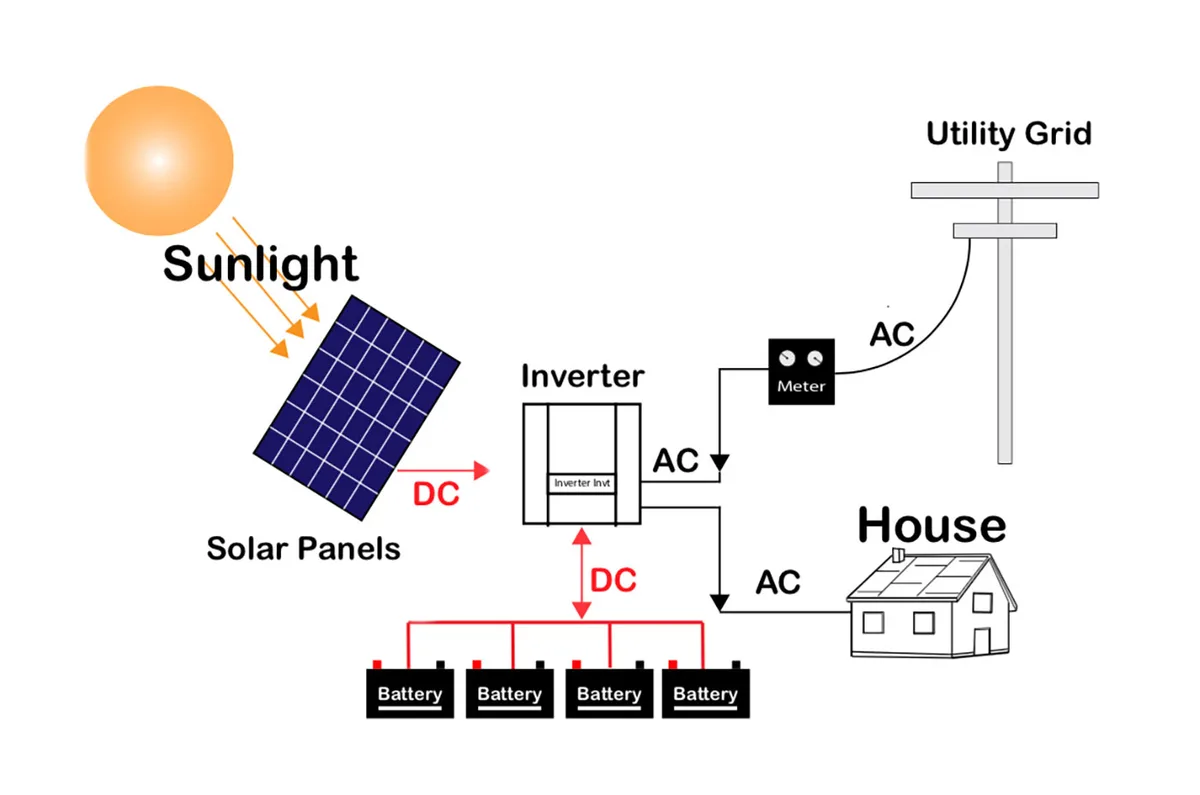
Image source: Web (Bing) / circuitdiagram.co (Web image (fair-use with source credit))
How Solar Energy Systems Work: A 20-Year Leap
Energy technology saw one of the most quiet but profound revolutions. In 2000, solar panels were largely experimental or for those "off the grid." They were expensive and inefficient. By 2020, the cost of solar had plummeted by nearly 90%.
We transitioned from simple silicon slabs to sophisticated photovoltaic systems that can power entire neighborhoods.
Modern systems use smart inverters that communicate with the grid in real-time. If you're looking into upgrading your home setup, you'll notice that the efficiency ratings have doubled since the early 2000s. We've moved from "Can this power a lightbulb?" to "Can this charge my electric car?"
The Rise of Artificial Intelligence
In 2000, AI was a character in a Steven Spielberg movie. In 2020, AI is the algorithm that decides what you see on TikTok, the voice assistant (Alexa/Siri) that sets your kitchen timer, and the software that helps your car stay in its lane. The sheer volume of data we produce, over 2.5 quintillion bytes daily, requires machine learning to process.
This has fundamentally changed everything from medical diagnoses to how we organize our digital files.
My Personal Experience: From Pixels to Presence
I clearly remember my first "high-tech" setup in 2000. It was a beige tower with a Pentium III processor. I felt like a king because I had a 20GB hard drive.
I used to spend hours downloading one song on Napster, praying no one would pick up the phone and kill the connection. It was a tactile, slow, and intentional experience.
By 2020, that nostalgia hit me hard when I realized I hadn't touched a physical piece of software in five years. I bought a new laptop, logged into my browser, and all my files, photos, and settings just… appeared. The friction was gone.
While I miss the "click-clack" of those old mechanical keyboards (though they've made a comeback!), I don't miss the frustration of a crashed Windows 98 Blue Screen of Death. The reliability of modern systems is something we often take for granted. We live in the future our 10-year-old selves dreamed about.
3 Tips for Navigating the 2020 Tech Landscape
- Prioritize Cybersecurity: In 2000, a "virus" usually just deleted some files. In 2020, identity theft and ransomware are major threats. Use a password manager and two-factor authentication (2FA).
- Audit Your Subscriptions: Since everything moved to the "Software as a Service" (SaaS) model, it's easy to bleed money on apps you don't use. Check your bank statements for those $9.99 charges.
- Manage Digital Wellness: The 2000s tech was easy to "turn off." 2020 tech is designed to keep you engaged. Set "Do Not Disturb" schedules to protect your mental health from the 24/7 notification cycle.
FAQ: Common Questions About 2000 vs 2020 Tech
Is tech from 2000 still usable today?
Mostly, no. Most websites today are too heavy for browsers from 2000 to load, and the security protocols (like HTTPS) have changed so much that an old computer can't even "talk" to modern servers. However, some old hardware is prized by retro gamers.
Was privacy better in 2000?
In many ways, yes. There was no "big data" in the sense we know it now. Social media didn't exist to track your every preference, and GPS wasn't standard in every phone.
Your "digital footprint" was more like a small toe-print.
Are we more productive now than in 2000?
That's a double-edged sword. We have better tools (Cloud docs, instant messaging), but we also have more distractions. The "multitasking" enabled by 2020 tech often leads to shallower work compared to the deep focus of the 2000s.
What happened to the batteries?
In 2000, we used Nickel-Metal Hydride (NiMH) or even Alkaline batteries for a lot of things. By 2020, Lithium-ion became the gold standard, allowing for faster charging and much thinner devices.
As we look back at the radical shift from the turn of the century to the start of the 2020s, it’s clear that we didn't just get better toys, we changed the way we live, work, and connect. It’s been a wild ride from those screeching modems to the silent, invisible power of the cloud. Whether you're a hardcore techie or just someone trying to keep up with the latest smartphone update, take a second to appreciate how far we’ve come.
It’s a pretty amazing time to be alive, and I can't wait to see what the next twenty years bring to our backyards and our pockets. Enjoy the journey!

I’m the tech enthusiast behind FixTechEasy. I know how stressful it is when your technology doesn’t cooperate. My goal here is to take the headache out of troubleshooting by breaking down complex tech problems into simple, easy-to-follow steps. From quick fixes to deep-dive guides, I’m here to help you get back to what matters most. Let’s get your tech working for you, not against you.